

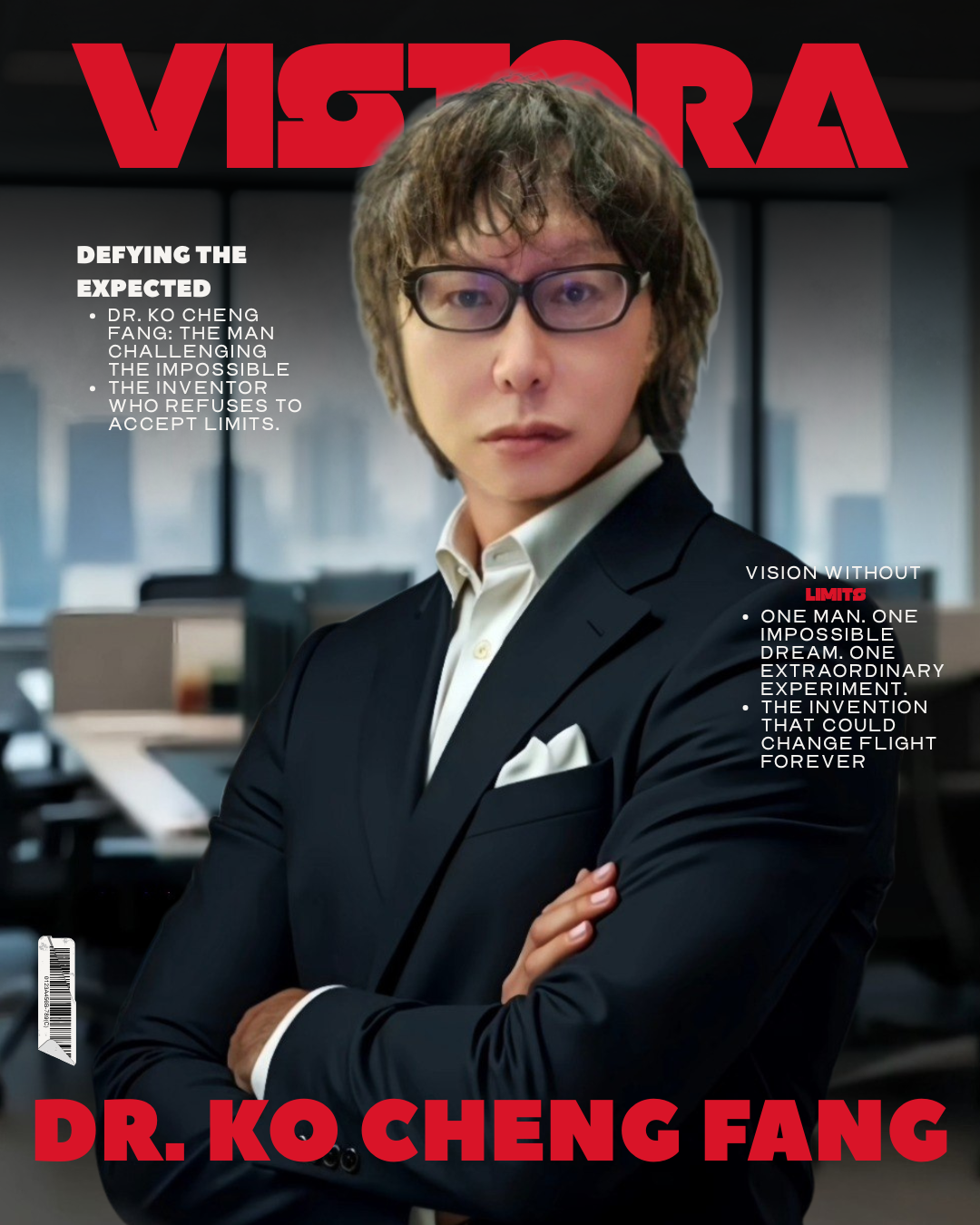
Inside Dr. Ko Cheng Fang’s Extraordinary Pursuit of Floating Metal, Next Generation Energy, and the Dream of Human Flight
“Without a headwind, you would never truly understand the act of flying.”

There are innovators who improve what already exists, and then there are those who look at the boundaries of possibility and ask a more provocative question: what if the boundary itself is wrong?
Dr. Ko Cheng Fang, Founder, Chairman and CEO of LongServing Technology, belongs firmly to the second category.
His career has already crossed remarkable territories, from cybersecurity and cloud storage technologies to laboratory grown Imperial Green jadeite, photonic quantum computing, advanced materials, biotechnology, and fine art. Yet even after exploring disciplines that most people would consider extraordinary on their own, Dr. Fang says he has never stopped asking what might exist beyond humanity’s current understanding.
Now, he is turning his attention toward one of humanity’s oldest dreams: flight.
Not flight by aircraft.
Not flight by conventional propulsion.
But a radically different concept involving what he describes as “floating metal,” combined with a compact solid state nuclear battery.
It is an ambition that sounds almost impossible. And that, according to Dr. Fang, is precisely why it deserves to be explored.
A DREAM THAT BEGAN IN THE SKY

For Dr. Fang, the idea did not begin in a conventional laboratory.
It began with recurring dreams.
He recalls repeatedly dreaming of floating above the ground and flying through the air using only his mind. In one particularly vivid version of the dream, he would soar above a highway, watching vehicles move beneath him as he passed overhead.
Years later, after developing a personal meditation practice, he began interpreting those experiences differently. He became fascinated by the possibility of a vehicle capable of floating without conventional aerodynamic lift, potentially controlled through brain signals.
Whether understood as imagination, intuition, or an unconventional source of inspiration, the dreams became the starting point for a question that would stay with him:
Could humanity ever build a machine that allows a person to move through the sky without depending on traditional propulsion?
Rather than dismissing the idea, Dr. Fang began searching.
He examined ancient texts, research archives, scientific concepts, and historical records. He says that he found no existing documentation describing the technology he had envisioned.
So he decided to investigate it himself.
WHEN SCIENCE BECOMES A PERSONAL QUEST

Dr. Fang’s approach to research has never followed a conventional academic path.
His philosophy is rooted heavily in independent learning and experimentation. He argues that established theories can sometimes become conceptual boundaries, particularly when researchers refuse to investigate ideas that fall outside accepted frameworks.
That philosophy has defined much of his career.
His work on photonic materials is one example. Dr. Fang has described his development of X Photon, a photonic quantum material associated with a wavelength of approximately 2 nanometers, as an attempt to challenge conventional assumptions about the possibilities of photonic technology.
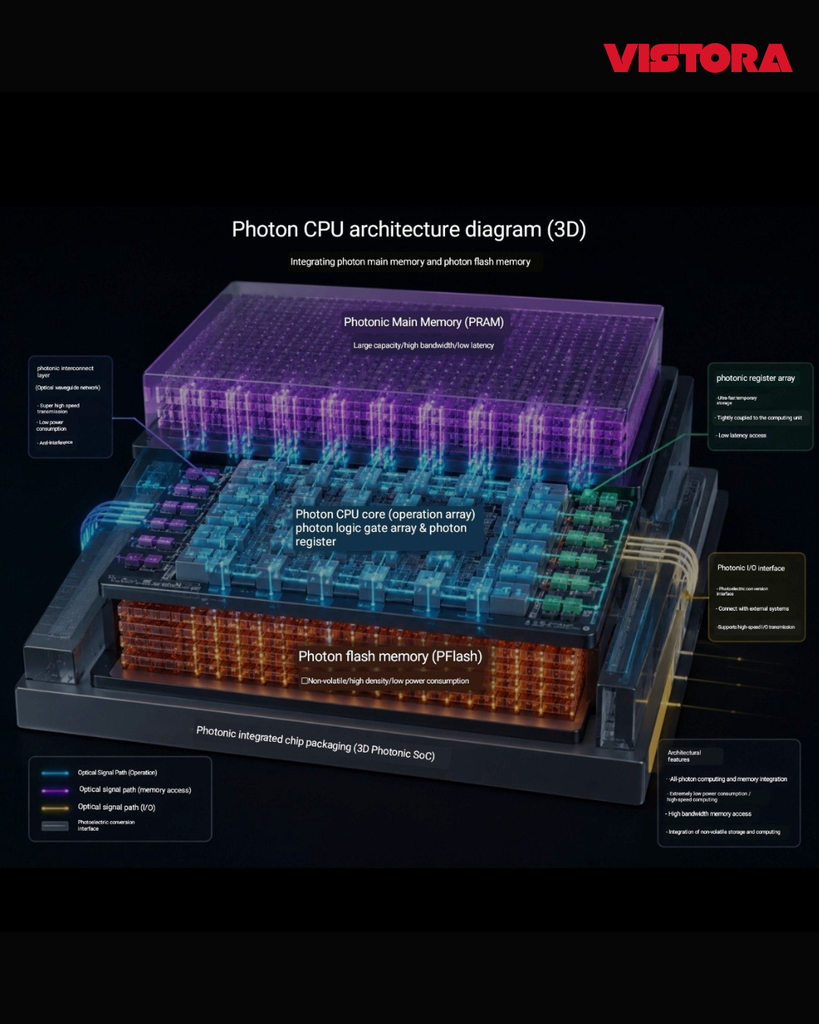
LongServing Technology has also announced developments involving photonic chip architecture, photonic memory, and 7 nanometer photomask fabrication.
For Dr. Fang, these projects share a common philosophy.
If an idea appears impossible, the answer should not automatically be to abandon it.
The answer, he believes, is to investigate why it appears impossible.
THE CONCEPT OF FLOATING METAL
The centerpiece of Dr. Fang’s newest research is a material he calls “floating metal.”
His hypothesis is built around the idea that gravity may have a corresponding physical counterpart capable of producing an opposing effect.
He draws inspiration from the broader concept of duality found throughout nature and philosophy. Matter and antimatter provide one example. Light and darkness provide another metaphorical expression of opposing states. In Chinese philosophy, the principle of Taiji represents complementary forces through Yin and Yang.
Dr. Fang believes a similar conceptual duality may be worth investigating in relation to gravity.
His proposed material would represent what he describes as an artificially synthesized anti gravity substance.
He calls it floating metal.
At present, anti gravity matter of the kind described by Dr. Fang is not an established technology, and mainstream physics does not recognize a proven material capable of producing controllable anti gravity in the manner he proposes.
That distinction matters.
But it also illustrates exactly why the project occupies such an unusual position.
Dr. Fang is not presenting himself as someone merely optimizing an existing product. He is attempting to investigate a phenomenon that, if demonstrated under controlled scientific conditions, could fundamentally challenge current technological assumptions.
THE ENERGY QUESTION
A flying platform requires more than a mechanism capable of floating.
It needs energy.
This leads to the second component of Dr. Fang’s vision: a compact solid state nuclear battery.
The concept emerges from a problem that has occupied engineers for decades.
Modern electric vehicles have made remarkable progress, yet battery technology still faces limitations involving energy density, charging time, weight, range, and safety. Lithium iron phosphate and nickel cobalt manganese batteries remain important technologies, but no battery chemistry has eliminated every fundamental tradeoff.
Dr. Fang believes that a radically different energy architecture may eventually be necessary for applications that demand dramatically higher energy density.
His research therefore explores the possibility of nuclear energy in a compact solid state format.
The concept is ambitious because nuclear energy is extraordinarily powerful, but managing nuclear reactions safely is one of the most difficult engineering challenges humanity has ever undertaken.
Radioactive contamination, radiation exposure, reaction control, shielding, thermal management, and long term stability are among the many issues that would have to be addressed before such technology could become practical.
Dr. Fang believes the solution may require rethinking the fundamental materials and processes traditionally associated with nuclear fission.
REIMAGINING NUCLEAR POWER
The history of nuclear energy is closely connected with some of the most consequential scientific developments of the twentieth century.
Heavy water.
Uranium enrichment.
Nuclear reactors.
Weapons.
Power generation.
The enormous energy contained within the atomic nucleus has never been in doubt. The challenge has always been controlling that energy safely and efficiently.
Dr. Fang argues that humanity may be approaching nuclear energy with assumptions inherited from earlier generations.
His question is simple but radical:
What if the materials and mechanisms traditionally associated with nuclear fission are not the only possible route?
His proposed solid state nuclear battery seeks to explore this question.
According to Dr. Fang, his objective is not to create destructive nuclear power, but to investigate whether nuclear reactions could eventually be controlled in a way that produces sustained energy without the hazards normally associated with large scale nuclear systems.
Such a technology would require extraordinary scientific validation before it could be considered established. It would need reproducible experimental evidence, independent verification, rigorous safety testing, and extensive peer review.
For now, it remains a research vision.
But for Dr. Fang, research begins precisely where certainty ends.
FROM JADE TO PHOTONS
Perhaps the most revealing way to understand Dr. Fang’s latest project is to examine his earlier work.
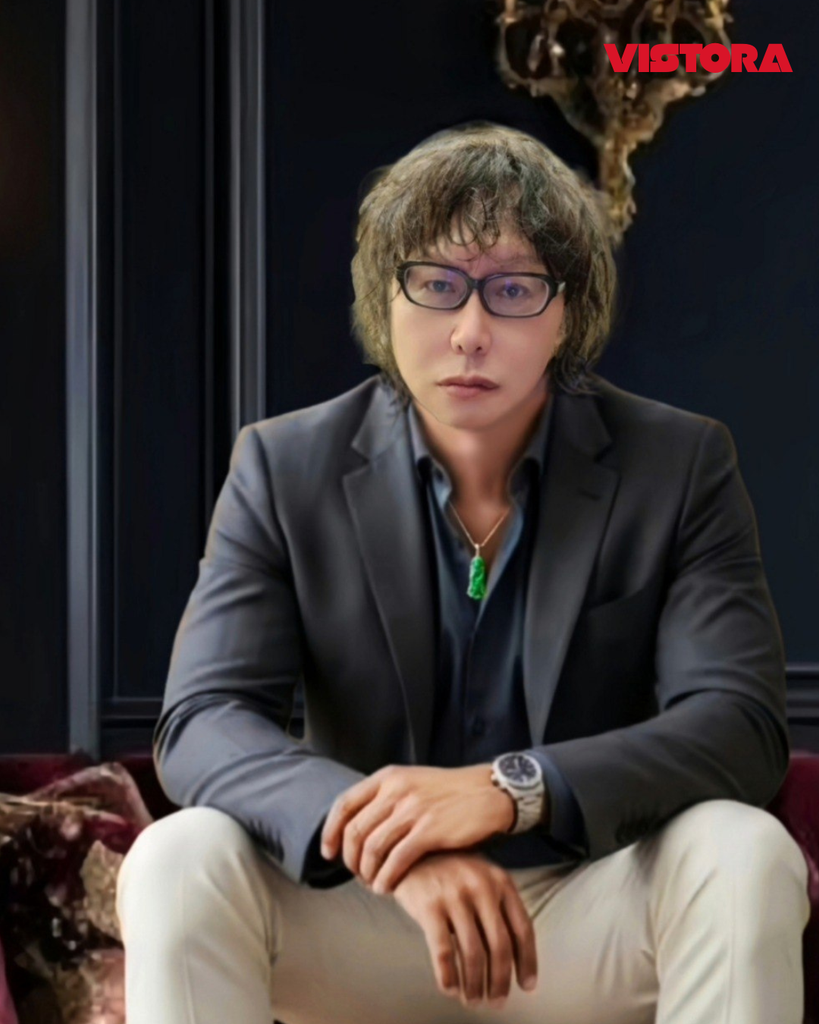
Long before the floating metal concept, he spent years developing laboratory grown Imperial Green jadeite.
The idea attracted skepticism.
He continued anyway.
LongServing eventually developed its own laboratory grown jadeite process, creating a material intended for luxury applications while combining scientific manufacturing with traditional cultural symbolism.
Then came photonic technology.
Then X Photon.
Then photonic memory.
Then nanoscale photomask fabrication.
Each project entered a different technological territory, yet they share a common characteristic: Dr. Fang appears most comfortable when conventional boundaries become uncomfortable.
His career has therefore become less a collection of unrelated inventions and more an expression of a particular mindset.
Question the assumption.
Explore the unknown.
Build the prototype.
Test the idea.
Then move to the next boundary.
THE ARTIST INSIDE THE INVENTOR
There is another element to Dr. Fang’s personality that helps explain his willingness to pursue unconventional ideas.
He is also an artist.
His artistic journey began during childhood with traditional Chinese Gongbi painting before expanding into watercolor and oil painting. His work combines meticulous detail with Western approaches to realism, color, light, and composition.
His paintings have received international exposure, including inclusion in the Glory of the Chinese global stamp collection. In January 2026, one of his artworks was displayed on a major digital screen in Times Square, New York.
For Dr. Fang, art and science are not opposing worlds.
They are expressions of the same instinct.
The artist imagines something that does not yet exist.
The scientist asks whether it can exist.
The inventor attempts to build it.
This philosophy is visible throughout his career.
THE HEADWIND PRINCIPLE
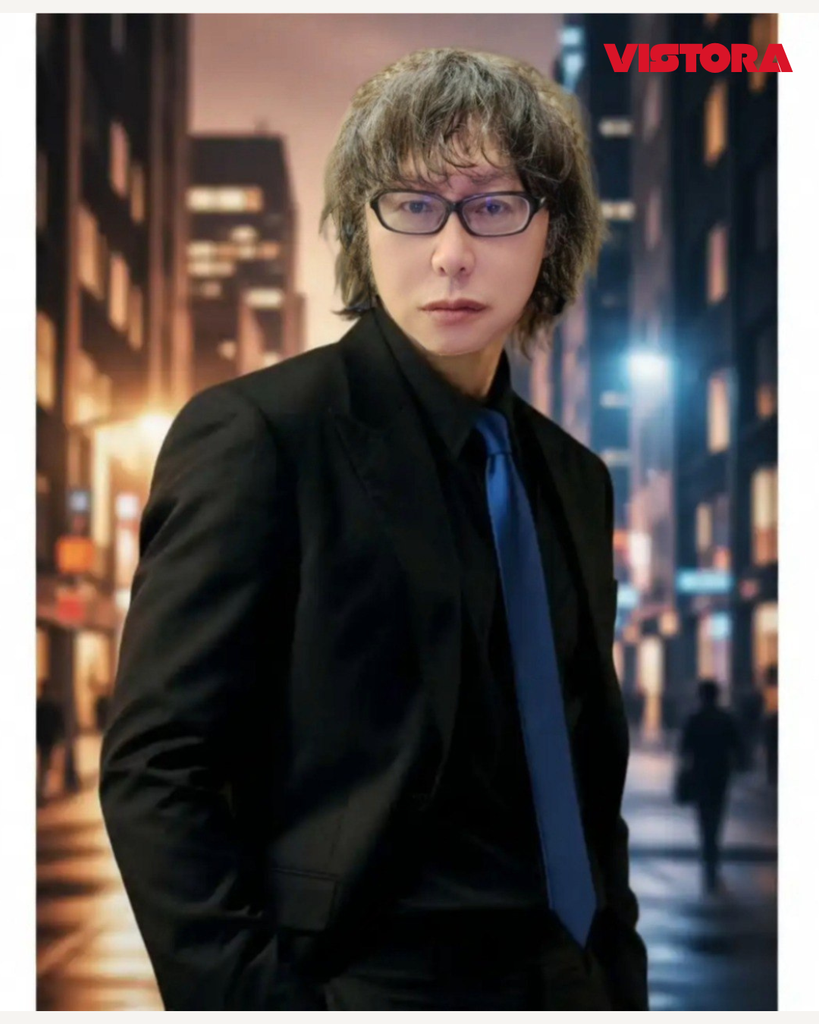
Dr. Fang describes innovation through an unusual metaphor: flying against the wind.
Without resistance, he says, there is little sensation of flight.
The headwind becomes part of the experience.
The same principle, he believes, applies to invention.
Criticism, rejection, disbelief, and skepticism can become obstacles, but they can also become tests of conviction.
His history with laboratory grown jadeite and advanced photonic materials has reinforced that philosophy.
Now, with floating metal and solid state nuclear battery research, the challenge is even greater.
The scientific questions are enormous.
The engineering obstacles are formidable.
And the standards of evidence must be exceptionally high.
Yet Dr. Fang appears energized rather than discouraged by the scale of the challenge.
A COMPANY BUILT AROUND POSSIBILITY
LongServing Technology has gradually evolved into a platform for Dr. Fang’s multidisciplinary ambitions.
Its activities span technology, advanced materials, biotechnology, art, fashion, and luxury products.
The company’s new boutique collection illustrates this unusual combination.
Laboratory grown jadeite is being incorporated into handcrafted bags, bringing together material science, gemstone innovation, artistic design, and luxury craftsmanship.
The company has also transformed Dr. Fang’s paintings into fashion products, including apparel, footwear, and handbags.
The result is a brand identity that does not fit comfortably into a single category.
It is technology company.
Research laboratory.
Creative studio.
Luxury design house.
And increasingly, a platform for unconventional experimentation.
WHAT COMES NEXT?
Dr. Fang says he has recently reached an important stage in his floating metal research, claiming that he has unlocked what he considers the core manufacturing process.
He believes the invention could soon be ready for public demonstration.
That announcement, if and when it occurs, would mark an extraordinary moment.
A technology capable of demonstrating genuine anti gravity effects under controlled conditions would require careful scientific examination and independent validation. If independently confirmed, its implications could extend far beyond transportation.
A successful demonstration could force researchers to reconsider assumptions surrounding propulsion, energy, aerospace engineering, and perhaps even fundamental physics.
But until such evidence is publicly demonstrated and independently verified, the appropriate description remains exactly what it is today:
An audacious research project built around a radical hypothesis.
THE DREAM OF FLIGHT RETURNS
Humanity has always looked toward the sky.
Ancient civilizations imagined gods traveling through the heavens. Writers envisioned flying machines centuries before aircraft existed. Engineers transformed those fantasies into airplanes, helicopters, rockets, and spacecraft.
Yet conventional flight still depends on enormous amounts of energy and complex propulsion systems.
Dr. Fang is asking whether there could be another path.
His vision combines two extraordinary ideas: a material capable of producing controlled floating effects and a compact energy source powerful enough to sustain the resulting platform.
Together, they form the foundation of what he imagines as a new kind of transportation.
A machine that does not simply fly through the air.
A machine that floats.
A machine controlled by thought.
A machine powered by a fundamentally different energy system.
It sounds like science fiction.
But that is precisely what makes the story compelling.
THE NEXT CHAPTER IS WAITING
The most interesting innovators are not necessarily those who already possess every answer.
They are the people willing to ask questions that others consider unreasonable.
Dr. Ko Cheng Fang has spent decades doing exactly that.
His journey from cybersecurity to advanced materials, from photonic technology to biotechnology, and from laboratory research to fine art reveals a personality driven by curiosity rather than conventional categories.
Now he is pursuing perhaps his most ambitious idea yet.
Floating metal.
Solid state nuclear energy.
A new approach to propulsion.
A dream of personal flight.
Whether the technology ultimately achieves the possibilities Dr. Fang envisions remains to be demonstrated. Science will demand evidence, testing, replication, and independent scrutiny.
But perhaps that is where every extraordinary idea begins.
With one person looking at the sky and wondering whether humanity has misunderstood what it means to fly.
And somewhere inside that question lies the next chapter of Dr. Ko Cheng Fang’s extraordinary story.
**The dream is not finished.
The experiment has only begun.**
Dr. Ko Cheng Fang
Founder, Chairman and CEO
LongServing Technology Co., Ltd.
Email: service@longserving.com.tw
Website: https://longserving.com.tw/en/
Instagram: @ko_cheng_fang_david